
It's always difficult to watch your child treat illness, but her fever is usually a sign that she's recovering. As her temperature began to drop, she should begin to feel better, but she won and is not yet fully healthy. Watch out for signs of deterioration. If you're worried, don't hesitate to call a pediatrician.
Sponsored Links
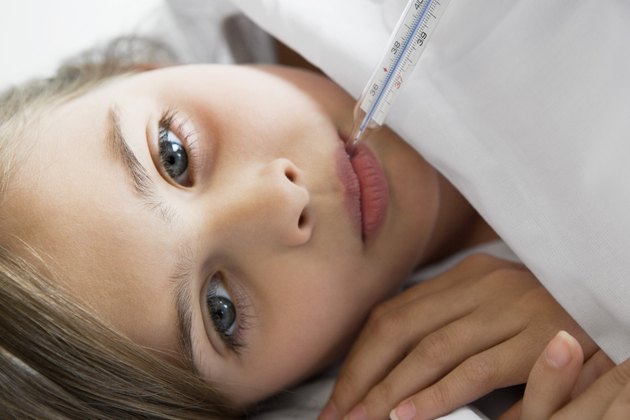 span= "article-image inner caption-class"> Her fever is only a sign of her illness. (Picture: Creatas images/creatas/getty images)
Basic knowledge of fever
Fever occurs when the body has to work harder than normal people to overcome the disease. The average human temperature is 98.6 degrees Fahrenheit, but your children are usually higher or lower than that. According to Dr. Barbara Huggins, if the child's rectum temperature is 100.4 degrees or higher, she will have a fever; the rectum temperature is often about one degree higher than the oral temperature. When the fever stops, as the body begins to cool down, her temperature should begin to fall back to normal. At this point she may begin to sweat. Fever caused by fever can be accompanied by life-threatening diseases ranging from common cold to meningitis. If she has only runny nose and sore throat, you can usually rest at home to treat her cold. If she has pain, vomiting, diarrhea and fever, she may have influenza and should see a doctor. In children aged 6 months to 3 years, fever may be caused by a common virus infection called rosella.